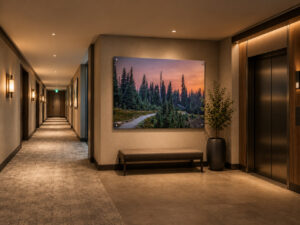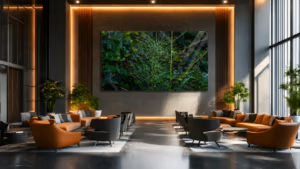
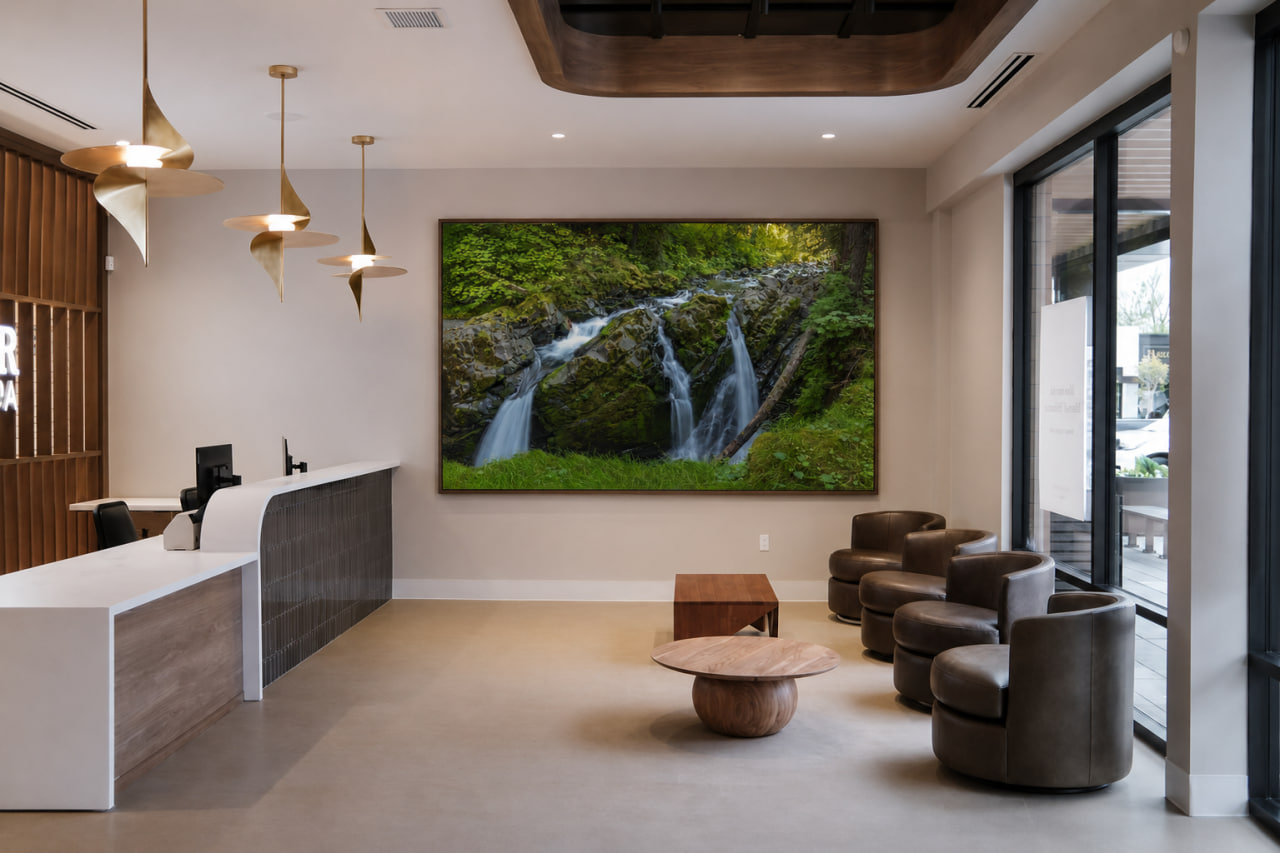
A wall is never neutral. Even when it is empty, it affects how a room feels — calm or unfinished, intentional or forgotten, expansive or constrained.
That is why I do not think of artwork as something added after a space is complete. In the right setting, art becomes part of how the room communicates.
Every Wall Already Communicates
Interior design already assigns purpose to almost everything in a room. Lighting directs attention. Materials create warmth or restraint. Furniture shapes movement, conversation and comfort.
Walls participate in that experience too.
A large blank wall can create openness, but it can also feel unresolved. A heavily decorated wall can create energy, but it can also add visual noise.
“What should we put on this wall?”
A more useful question is:
“What should this wall help people feel or do?”
Start With the Emotional Job
Before choosing subject matter, color or finish, I like to define the emotional job of the space.
An arrival wall may need to create confidence and orientation.
A corridor may need rhythm and continuity.
A guest room may need softness and recovery.
A meeting room may need mental spaciousness.
A wellness environment may need quiet and refuge.
Once that job is clear, the artwork can be selected with much more intention.
This changes the conversation from Which picture looks good here? to Which image supports the experience this room is trying to create?
Different Landscapes Create Different Kinds of Presence
Not every nature image creates the same response.
Water can create softness and visual release.
An open horizon can create a sense of psychological space.
Forest can suggest shelter, depth and refuge.
Mountains can introduce scale, stability and perspective.
Atmospheric light can make a room feel quieter and more human.
These differences matter because two images may both be beautiful while doing completely different emotional work inside an interior.
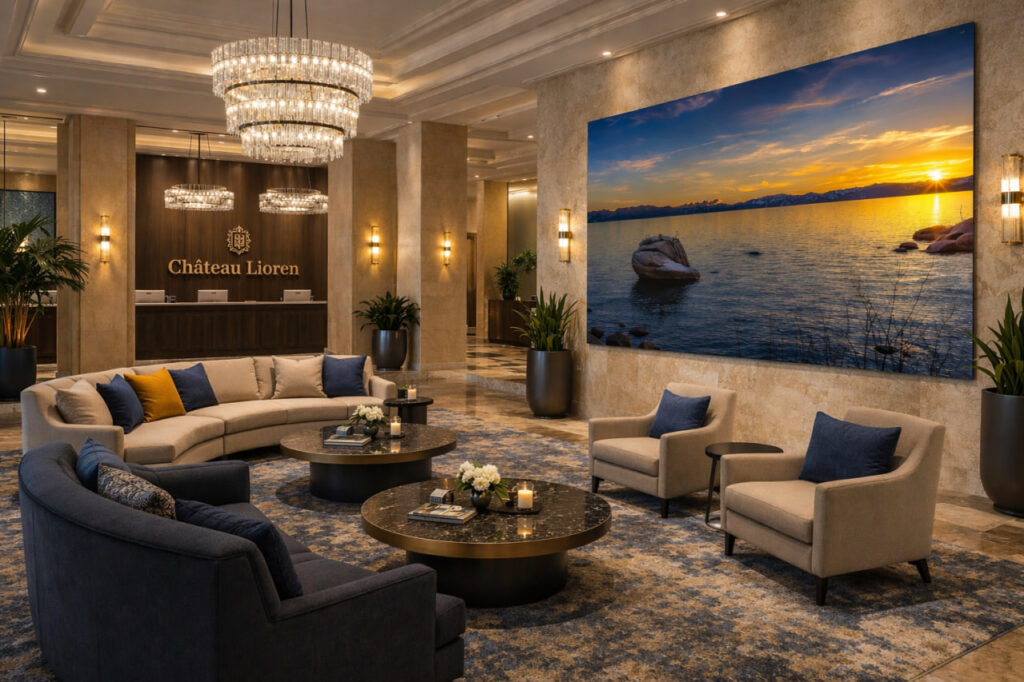
Scale, Placement and Finish Change the Result
The photograph is only one part of the decision.
Scale determines whether the artwork becomes an anchor or a supporting element.
Placement affects how the eye moves through the room.
Finish changes how the image physically presents itself.
Acrylic can feel clean and architectural. Canvas can soften the image and introduce warmth. Fine-art paper can feel quiet and refined. Metal can bring crispness and contemporary presence.
The same photograph can therefore land very differently depending on how it is produced and where it is placed.
From Filling Space to Creating Presence
When artwork is selected only because a wall is empty, the decision usually happens too late.
When the emotional purpose of the wall is considered earlier, art becomes part of the design logic of the room.
It can support arrival.
It can create pause.
It can reduce visual noise.
It can introduce perspective.
It can help a space feel more complete.
That is the difference between filling a wall and resolving one.
A Simple Check Before Selecting Artwork
☐ What should this wall help people feel?
☐ Is the artwork meant to anchor the room, support it or create a pause?
☐ Does the landscape language match the emotional job of the space?
☐ Is the scale strong enough for the architecture?
☐ Does the finish reinforce the material character of the room?
These questions take only a few minutes, but they can completely change the quality of an artwork decision.
The Wall Is Not Empty
Every wall contributes something to the experience of a space.
The opportunity is to decide what that contribution should be.
When artwork is selected with that intention, it becomes more than decoration.
It becomes part of the atmosphere.
Part of the experience.
Part of the reason a room feels the way it does.
The wall is not empty. It has a job.