Large walls often create pressure to “go big,” but size alone does not solve the problem.
The right scale comes from the relationship between artwork, architecture, furniture, viewing distance and the emotional job of the wall. A piece can be technically large and still feel visually weak — or modest in dimensions and still hold the room.
Scale Is a Relationship, Not a Number
Artwork scale should never be judged in isolation.
A 60-inch piece may feel substantial in one room and undersized in another.
Ceiling height, wall width, furniture placement, architectural lines and viewing distance all influence how the artwork is perceived.
The question is not simply:
“How large should the artwork be?”
A better question is:
“How much visual presence does this wall need?”
Start With the Architecture
Architecture sets the first scale reference.
A long wall may need horizontal emphasis.
A double-height space may require stronger vertical presence.
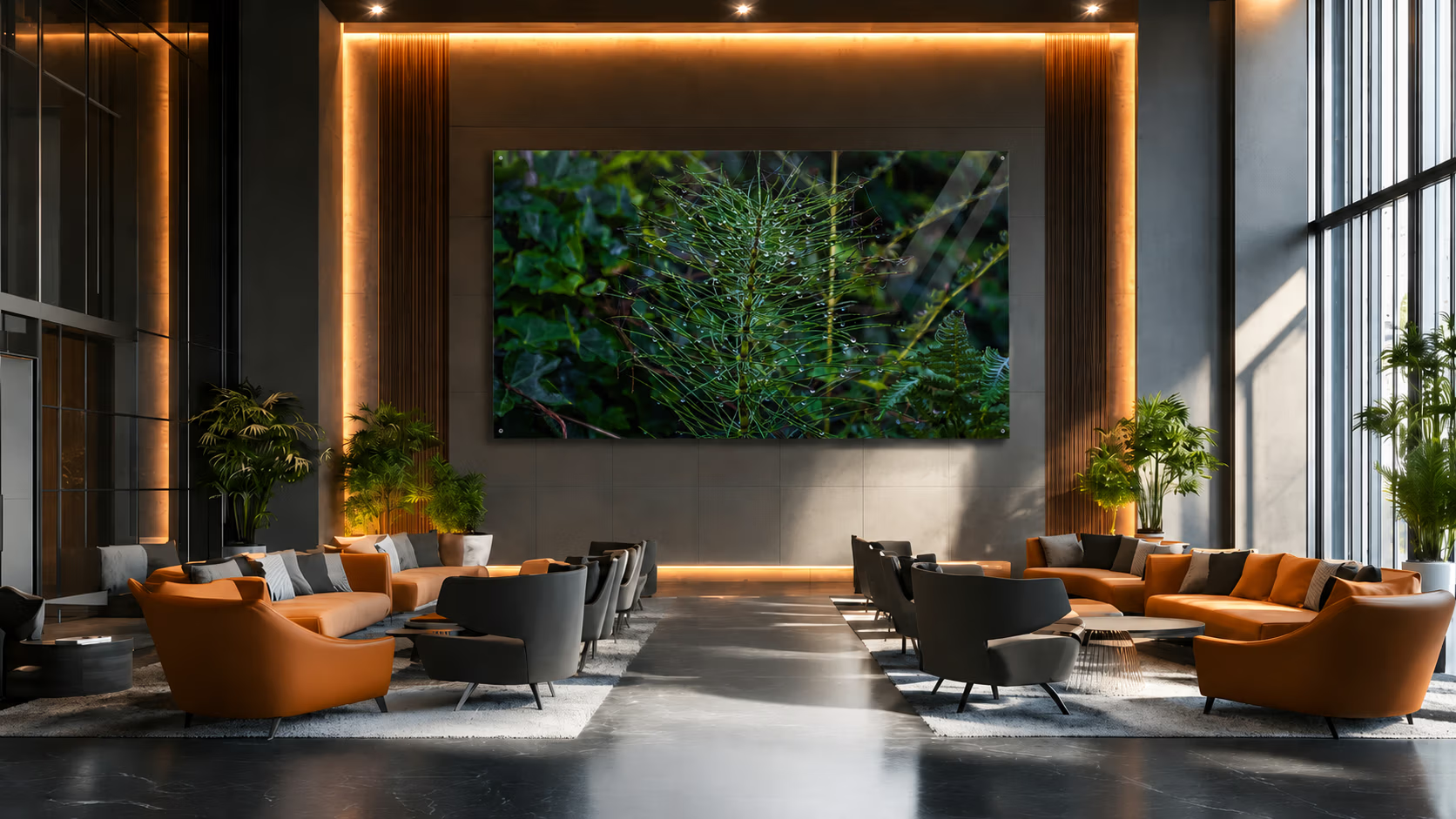
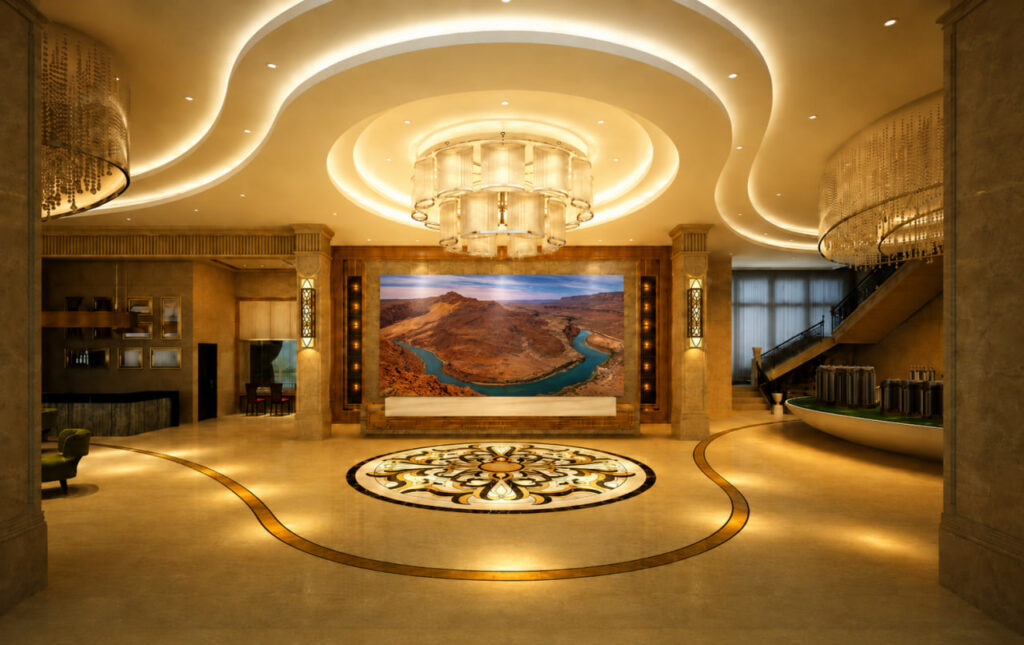
A wide reception wall may benefit from one dominant piece or a carefully coordinated multi-panel composition.
The artwork should feel proportionate to the architectural gesture around it, not as though it was selected separately and added afterward.
Viewing Distance Changes Everything
Artwork that is viewed from across a lobby or down a corridor needs a different scale than artwork experienced from a few feet away.
Greater viewing distance usually requires greater visual presence.
That does not always mean simply increasing dimensions. Contrast, composition, image clarity and the strength of the subject also influence how well the artwork holds attention from a distance.
A quiet image can still work at large scale if its structure remains strong.
Furniture Creates a Second Scale Reference
Furniture changes the way a wall is read.
Artwork above a sofa, console, reception desk or bed is visually connected to that object.
If the artwork is too narrow, the wall can feel fragmented.
If it is too large, the furniture may appear visually compressed beneath it.
The strongest relationship often comes when the artwork feels integrated with the furniture grouping rather than floating independently above it.
One Large Piece or Several?
Not every large wall needs one oversized artwork.
Sometimes a single large image creates the clearest visual anchor.
In other cases, a diptych, triptych or coordinated series can better respond to the proportions of the wall.
The decision depends on whether the space needs one strong focal point or a visual rhythm that moves across the architecture.
Multiple pieces should still read as one intentional composition rather than as several unrelated images filling available space.
Scale Should Support the Emotional Job
Scale affects more than proportion.
It changes how the artwork feels.
A large open-water image can create expansiveness.
A large forest image can create immersion and shelter.
A large mountain landscape can introduce perspective and grounded presence.
The same image at a smaller scale may become quieter and more intimate.
So scale should support the emotional function of the room, not just the dimensions of the wall.
Finish Can Change Perceived Scale
Finish also influences how substantial an artwork feels.
Acrylic can increase visual clarity and architectural presence.
Metal can feel crisp and contemporary.
Canvas can soften the image and reduce visual formality.
Fine-art paper can feel quieter and more refined.
Even when the physical dimensions stay the same, the finish can change how strongly the artwork occupies the wall.
Avoid the “Almost Large Enough” Problem
One of the most common mistakes with large walls is choosing artwork that is technically large but still visually timid.
This often happens when the decision is based only on product size rather than the scale of the room.
The result can feel hesitant.
A larger wall needs enough visual weight to feel resolved.
When the artwork is underscaled, the wall often looks more empty rather than less.
A Simple Check Before Choosing Scale
☐ How wide and tall is the wall?
☐ What furniture or architectural elements sit beneath or beside it?
☐ From how far away will the artwork usually be viewed?
☐ Does the wall need one strong anchor or a coordinated composition?
☐ Is the artwork large enough to hold the room without overpowering it?
☐ Does the scale support the emotional job of the space?
These questions are often more useful than starting with a standard size chart.
The Right Scale Resolves the Wall
Large walls do not simply need larger products.
They need artwork that understands the architecture around it.
When scale, placement, furniture, finish and viewing distance are considered together, the artwork begins to feel inevitable — as though it belongs to the room rather than merely occupying it.
The goal is not to fill a large wall. It is to give the wall the right amount of presence.