Some landscapes feel larger than their physical dimensions.
We can stand in front of a photograph that occupies only a portion of a wall and still experience a surprising sense of distance.
The eye travels.
The mind follows.
And for a moment, the room seems to extend beyond its architecture.
This is one of the qualities I return to again and again in landscape photography: spaciousness is not only something we measure. It is something we feel.
A landscape can create that feeling through distance, horizon, light, scale and the simple suggestion that there is somewhere for the eye to go.
The Horizon Gives the Eye Somewhere to Rest
An open horizon creates a visual destination.
The foreground may contain water, desert, grassland or snow, but somewhere beyond it there is a line where the landscape releases into distance.
That line matters.
In a dense visual environment, the eye is constantly negotiating objects, edges, textures and information.
A horizon does something different.
It allows the gaze to move outward.
There is less immediate visual resistance.
The image begins to feel less like an object being looked at and more like a space being entered.
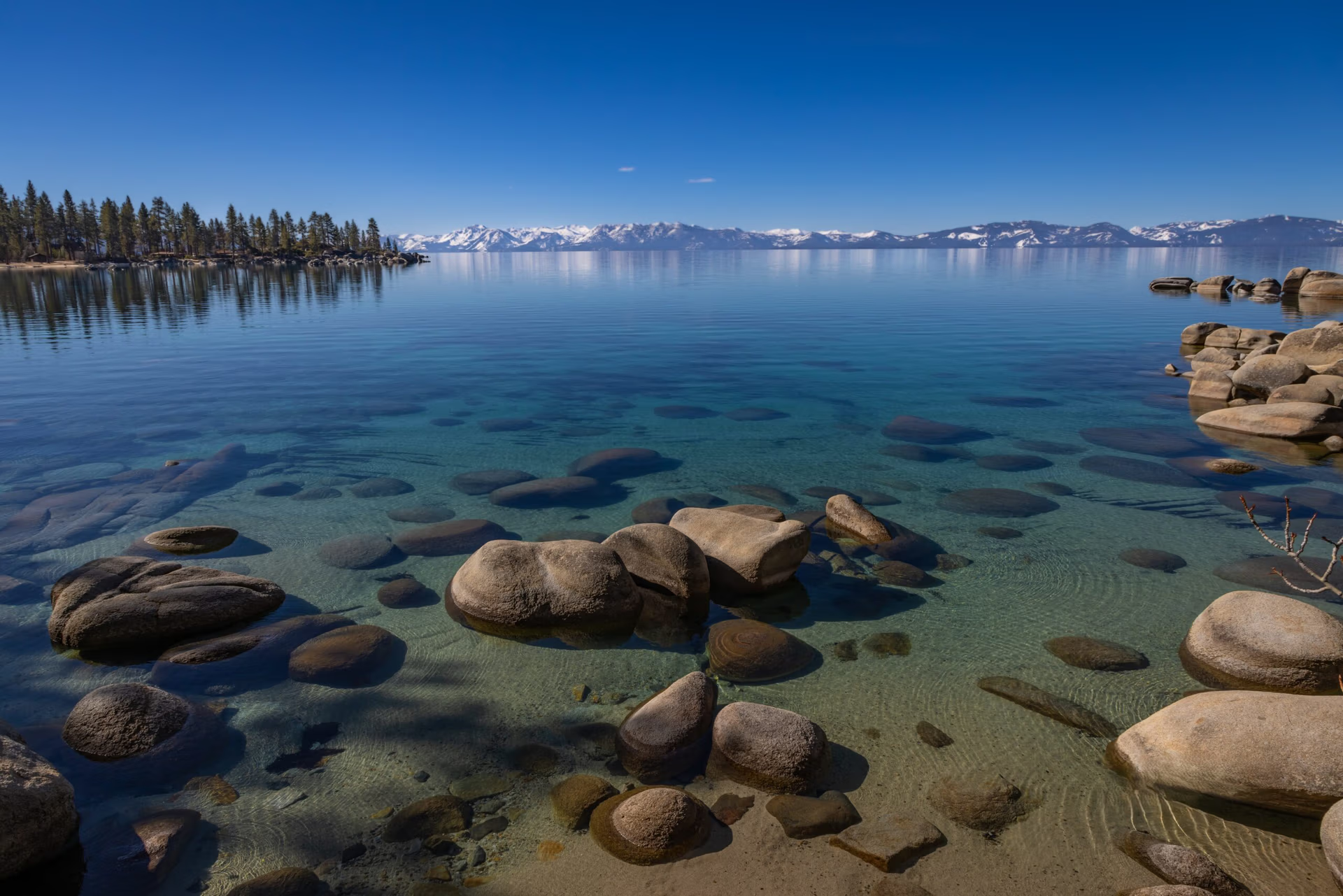
This is especially noticeable in photographs of water.
A lake or coastline can create a long visual path before the eye finally meets the mountains, sky or distant shore.
The image contains depth, but it also contains permission to look farther.
Distance Changes the Emotional Scale of an Image
A landscape does not need to be empty to feel spacious.
Mountains can fill much of the frame and still create enormous psychological distance.
What matters is how the layers relate to one another.
A foreground establishes where we are.
A middle distance carries us through the scene.
A far horizon gives us somewhere beyond the immediate moment.
The result is a kind of visual breathing room.
This is why two photographs of the same place can feel completely different.
A compressed composition may feel intimate, protected or enclosed.
A wide composition with several layers of distance may feel expansive, reflective and open.
Neither is better.
They simply do different emotional work.
Spaciousness Is Not the Same as Emptiness
There is an important distinction between open and empty.
An empty image may have very little visual information, but that alone does not create presence.
Spaciousness usually needs structure.
A shoreline can guide the eye.
A mountain range can hold the horizon.
Clouds can introduce rhythm.
Reflections can connect the foreground to the distance.
The photograph still needs enough visual information to orient us.
The openness comes from the relationship between those elements rather than from the absence of them.
This is one reason I am drawn to landscapes where the scene feels quiet but not vacant.
There is something to discover, but nothing is competing too aggressively for attention.
Light Can Make Space Feel Larger
Light changes our perception of distance.
Clear light can reveal layer after layer of a landscape.
Atmospheric light can soften those same layers and make them recede.
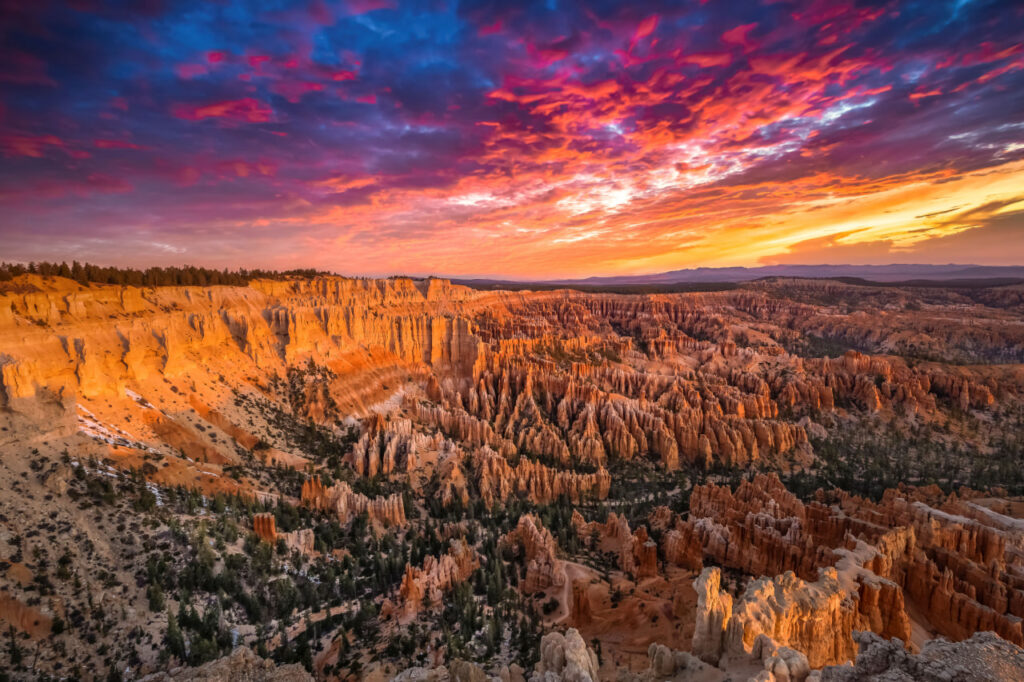
At sunrise and sunset, the effect can become especially strong.
Warm light may touch the foreground while distant mountains remain cool.
Mist may separate one ridge from another.
A reflection may double the apparent depth of the sky.
Photography cannot reproduce the physical scale of the landscape, but light can help suggest it.
The eye reads these tonal and atmospheric differences as distance.
And distance creates room.
Why This Matters Inside a Room
The experience does not disappear when the landscape becomes a photograph on a wall.
An interior has physical boundaries.
A photograph can introduce another visual direction within those boundaries.
That does not literally make the room larger.
But it can change how confined or open the room feels.
A broad horizon can create a sense of release.
A distant mountain range can introduce perspective.
Water can create visual continuity.
A sky with space around it can reduce the feeling of visual density.
This becomes especially useful in rooms where architecture offers limited outward views.
A meeting room may have few windows.
A corridor may feel compressed.
A guest room may need a greater sense of calm and mental distance.
Artwork cannot replace architecture, but it can influence how the architecture is experienced.
The Photograph Becomes a Kind of Window
I do not mean this literally.
A landscape photograph does not need to imitate a window or pretend that the wall is not there.
Its value is more subtle.
The photograph gives the eye a place to travel that the physical room cannot provide.
That journey might last only a few seconds.
But those few seconds can change the emotional temperature of a space.
The viewer is no longer looking only at a wall.
There is water beyond it.
A mountain beyond that.
Light moving toward a horizon.
And with that comes a temporary sense of distance from whatever is immediate.
Choosing for Spaciousness
When I look for a photograph that can bring more visual openness into a space, I pay attention to several things at once.
I look for a composition with depth rather than only surface detail.
I look for a clear visual path.
I look for enough negative space that the eye is not crowded.
And I look for a horizon or distant element that gives the image somewhere to go.
The subject itself may change.
Lake.
Ocean.
Desert.
Mountain.
Open field.
But the emotional function can remain remarkably similar:
create room beyond the room.
Presence Through Distance
Some landscapes calm us because they surround us.
Others calm us because they release us.
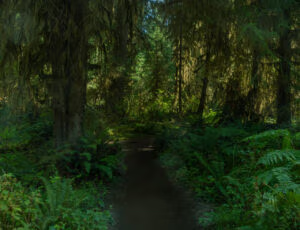
The forest can create shelter.
A distant horizon can create possibility.
One brings the world closer.
The other allows the mind to travel farther.
Both are forms of presence.
They simply arrive through different kinds of space.
The landscape does not make the room larger. It gives the mind somewhere farther to go.