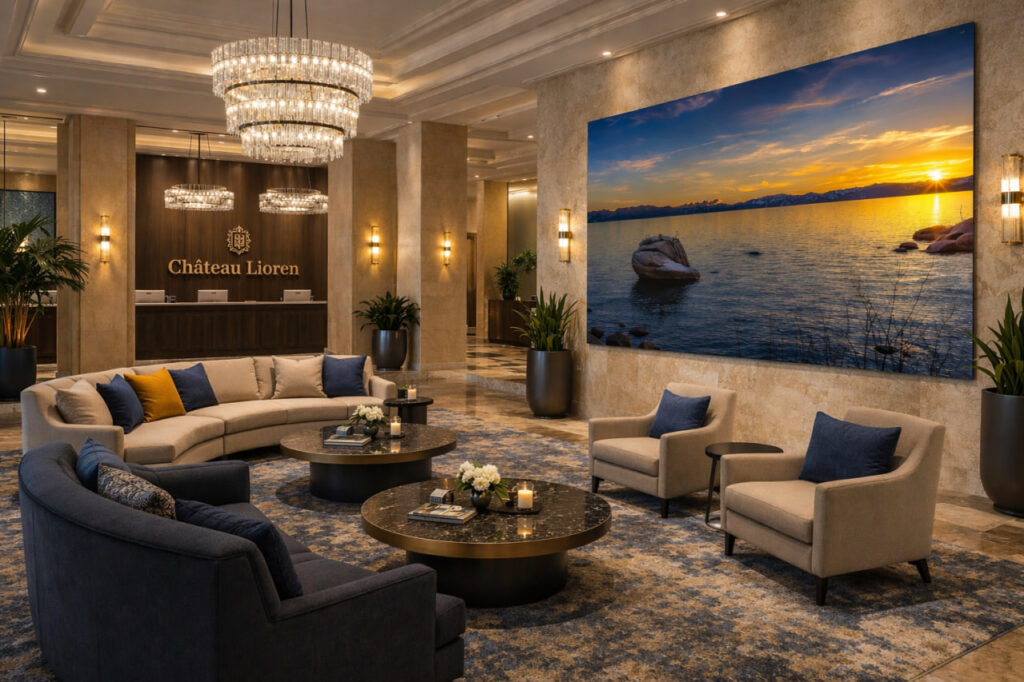
A hotel lobby is more than an arrival space. The right artwork can establish atmosphere, orientation and the emotional tone guests carry into the rest of the property.
A hotel lobby begins communicating before a guest reaches the front desk. Scale, materials, lighting, circulation and sound all contribute to the first impression of the property.
Artwork participates in that first impression too. In a lobby, it is not simply decoration. It can help establish atmosphere, create orientation and give the arrival experience an emotional point of view.
The Lobby Sets the Emotional Temperature
Arrival spaces carry unusual responsibility. They must welcome, orient and reassure people while also expressing something about the identity of the property.
Guests may enter after a long flight, a difficult drive or an overloaded workday. They may be unfamiliar with the building, the city or even the country.
The lobby therefore needs to communicate quickly.
Artwork can help determine whether that first impression feels energetic, quiet, sophisticated, expansive or restorative.
The question is not only:
“What artwork looks impressive here?”
A better question is:
“What should guests begin to feel when they arrive?”
Start With the Kind of Arrival
Not every hotel needs the same emotional arrival.
A resort may want the lobby to create release and anticipation.
A business hotel may need clarity, confidence and calm.
A wellness property may benefit from softness and visual quiet.
A boutique hotel may want stronger character and a more distinctive sense of place.
A luxury property may need artwork that feels substantial without becoming visually aggressive.
Defining that emotional direction before selecting the image makes the artwork part of the hospitality experience rather than an object added at the end.
Scale Should Respond to the Architecture
Hotel lobbies often contain larger volumes, longer viewing distances and stronger architectural gestures than residential interiors.
That changes the scale conversation.
Artwork that feels substantial in a home can appear surprisingly small in a double-height lobby, behind a reception desk or across a large lounge wall.
The artwork should respond not only to the dimensions of the wall, but also to viewing distance, ceiling height, surrounding furniture and the visual weight of the architecture.
Sometimes one large image creates the strongest anchor.
In other spaces, a coordinated group or panoramic composition may better support the proportions of the room.
The Landscape Should Support the Experience
Subject matter matters because different landscapes create different forms of presence.
Open water and distant horizons can introduce spaciousness.
Forest imagery can create shelter and depth.
Mountains can bring perspective, stability and scale.
Softer atmospheric scenes can reduce visual intensity and help an arrival space feel more human.
The most successful choice is not necessarily the most dramatic photograph.
It is the photograph whose emotional language supports the experience the hotel is trying to create.
Placement Is About More Than an Empty Wall
A prominent wall is not automatically the right wall.
Artwork should be considered in relation to how guests enter, move, wait and gather.
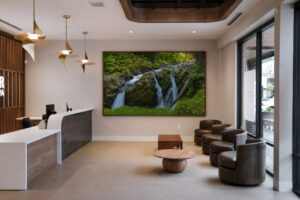
Behind reception, it may become part of the property’s first visual identity.
Across a lounge, it may encourage the eye to travel farther into the room.
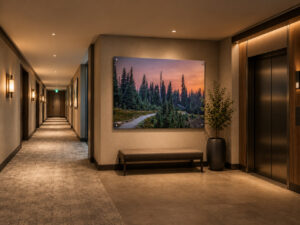
At the end of an arrival axis, it can create a visual destination.
Near seating, it may contribute more quietly to atmosphere.
Placement works best when it supports the movement and hierarchy already built into the interior.
Finish Changes How the Artwork Lands
he same photograph can communicate differently depending on the finish.
Acrylic can feel polished, clean and architectural.
Metal can bring crispness and contemporary presence.
Fine-art paper can create a quieter, more refined presentation.
Canvas can soften the image and introduce warmth.
The right finish should support the materials, lighting and level of formality already present in the hotel.
The goal is not for the artwork to feel applied to the architecture.
It should feel considered with it.
A Lobby Needs an Anchor, Not More Noise
Hospitality interiors already contain a great deal of information: lighting, furniture, signage, circulation, materials, people and movement.
Artwork does not always need to compete with that complexity.
Sometimes its strongest role is to provide one clear visual anchor.
A place for the eye to rest.
A moment of nature inside an active environment.
A visual cue that makes the lobby feel less generic and more memorable.
A Simple Check Before Choosing Lobby Artwork
☐ What should guests feel in the first ten seconds?
☐ Is this artwork meant to anchor the arrival or support the surrounding atmosphere?
☐ Is the scale strong enough for the architecture and viewing distance?
☐ Does the landscape language fit the type of hospitality experience?
☐ Does the finish work with the materials and lighting of the lobby?
☐ Will the artwork still have presence when the space is busy with people?
Answering these questions before choosing the final image can turn artwork from a finishing detail into part of the arrival strategy.
Art Begins the Guest Experience
A hotel lobby does more than receive people.
It introduces the property.
The artwork within it can help establish calm, confidence, openness, energy or a sense of place before a guest has reached the elevator.
When image, scale, placement and finish are considered together, the wall becomes part of the hospitality experience itself.
The strongest lobby artwork does not simply fill the arrival space. It helps define the arrival.
Corridors are often treated as spaces to pass through rather than places worth experiencing. Yet artwork can transform how a corridor feels — introducing rhythm, visual pauses, direction and continuity. The right artwork does more than fill a long wall. It gives the journey through a building a sense of purpose.
Guest-room artwork has a different job from lobby or corridor art. It should support rest, reinforce the character of the room and add presence without asking too much from a tired guest.
Every wall communicates something. The question is whether artwork simply fills space — or helps shape how that space feels, functions and is remembered.